 By now, everyone and their mothers has seen the new Twilight film, "New Moon." I've seen it. In fact, I joke that I am a hater, therefore I saw it twice. I have also read the books, as have millions of people who are not quite sure what good writing is anymore. If you know me, then you know my take on the books: slow, bad and choppy writing, and in the case of "Breaking Dawn," hours of my life I will never get back. Yes, I think "Breaking Dawn" was one of the WORST books I have ever read. But I digress...
One thing that always happens when books are made into movies is the inevitable comparison between the film and the movie. Most people are die-hards for the book version of a story. They want a certain scene to be featured, or a certain character to get more screen time. Often times, the scene in the film differs so greatly from the scene they imagined while reading the book that they cannot bring themselves to accept the director's vision. Sometimes audiences give the benefit of the doubt to the movie's director, knowing a novel of more than 150 pages will probably not have every aspect of the book shown in the film. Others are not so forgiving. They simply cannot accept that the film did not include enough of what they wanted from the book.
The problem I have is with the latter group. In "New Moon," so many people were walking out of the theater, thinking, "(insert movie scene here) was not in the book!" or "I can't believe they didn't talk about (insert book moment here)." It was impossible for them to watch a movie without comparing it to the book. From where I sat (and I have sat in this seat in many film adaptations), these people were not going to be satisfied with the final film result anyway. Don't get me wrong - the screaming in the theater when the teenage boy and the skinny Brit took the screen were distracting enough. But that's not the story they're throwing panties at the screen for; it's the actors. As for the story, they are already thinking of what was in the book that was not in the film. In this movie, that includes the omission of the introduction of imprinting and Carlisle's backstory not as flushed out, and the inclusion of the fight between Edward and Felix, a fight people complain was not in the book in the first place. Before the next scene of the film has begun, book die-hards are already casting judgments in their minds as to how true to the book the previous scene was.
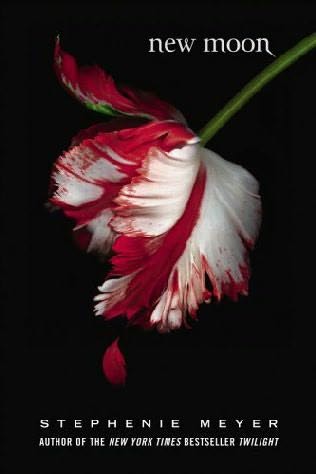 As far as I am concerned, those who are so die-hard for the books have already decided on some subconscious level that they are not going to enjoy the movie, even if they do on the surface. They just cannot get fully absorbed into the movie if they are thinking about the book. However much they enjoyed the book, the movie has been ruined for them. They cannot respect the director's vision or the actors' interpretation.
The bottom line is that no matter what any book says, the film has to be an interpretation of the material in the book, not a literal translation. Unless the writer of the book becomes the writer of the script and the director of the film, the writer's imagination will not be fully realized, no matter what. The film has to be its own story. It has to take the book's story, theme, characters, and biggest moments and re-create them for the screen. Naturally, that means not everything will be included. Not all of the most memorable or touching moments from a book are right for a film. Not all of a character's backstory or internal thoughts can be told in a movie; not only is it time-consuming, it's boring to film audiences. A director has to make the decision to either enhance or omit a scene if it makes for a better film. A book can take umpteen pages to tell a story, whereas a film has 120 pages, give or take, to tell a story. A book can tell, but a film has to show.
For those who want to remain loyal to the books, that's fine. There are several books that I have enjoyed so much more than the film version, mostly because I felt as if the film didn't get the heart and soul of the book. Other times, I have fallen in love with a film adaptation so much that the book only makes me want to watch the movie again. Regardless, I should never have to read a book before going to see a movie. I should not have to do my homework on what the character's are supposed to be feeling or where they came from, or what a scene was supposed to be like. I am only concerned with the story the director chose to tell. If it's not on the screen, I don't care. If the director chose to include, enhance, or omit a piece of information, I am only concerned with how that makes me feel in the context of the film. I don't want to know who my characters are and where they came from before the previews end. I want the director to give that information to me. I want to feel what they feel in the moment without already knowing where it will go next.
As long as popular books are being made into films, the books will ruin the movies for the fans. Fans will still go to the theaters, have their 2-hour visceral experiences, and head to the nearest bar or Starbucks to talk about how "they can't believe that scene wasn't in the movie!" And when someone tells them they didn't like the movie or didn't understand something, they will simply say, "well, if you had read the book, you would know." Books are wonderful, but they are ruining movies.

0 comments:
Post a Comment